

If your furnace smells a little dusty the first time you turn it on, that’s usually normal. Dust settles inside the system over the summer and burns off when the heat comes on.
That smell should fade pretty quickly.
Burning plastic, electrical odors, smoke, exhaust, or rotten eggs are different. Those can point to overheating parts, wiring problems, combustion issues, or a gas leak.
The type of smell, and whether it fades or gets stronger, can tell you a lot about what’s going on.
What Does Your Furnace Smell Like?
Different furnace smells can point to very different problems.
| What You Smell | Possible Cause | What To Do |
|---|---|---|
| Dusty or slightly burnt | Dust burning off after months of sitting | Monitor it. The smell should begin to fade. |
| Burning plastic, wax, or electrical odor | Overheating motor, wiring, capacitor, or electrical part | Turn the furnace off and schedule service. |
| Rotten eggs or sulfur | Possible natural gas leak | Leave the home immediately and call 911 and your gas utility. |
| Musty or moldy | Moisture, mold, humidifier, coil, or blower contamination | Have the source inspected if the smell continues. |
| Smoky or oily | Oil burner or combustion problem | Turn the system off and have it inspected. |
| Exhaust or fumes | Combustion or venting problem | Turn the system off and schedule an inspection. |
Dusty or Burning Smell When the Furnace First Turns On
This is the smell most homeowners notice in the fall.
Your furnace may sit for months without running. Dust settles on the burners and other hot parts.
Then you turn the heat on.
The dust gets hot. You smell it through the vents.
That is usually normal.
The important part is what happens next.
The smell should start to fade as the furnace runs.
If it keeps getting stronger, comes back again later, or starts smelling like plastic or electrical parts, something else may be going on.
Regular heating maintenance can also help catch dirty parts and airflow problems before they turn into bigger repairs.
Burning Plastic, Wax, or Electrical Smell
This one deserves more attention.
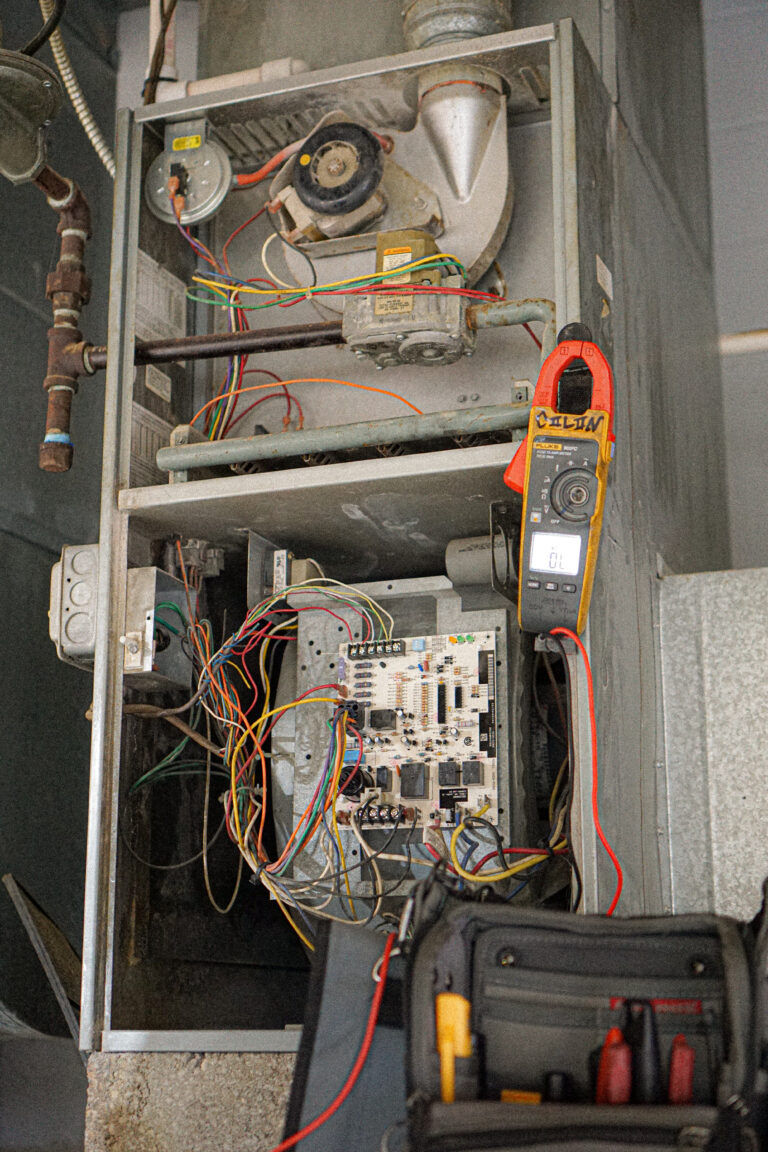
A burning plastic, waxy, or electrical smell can come from an overheating motor, damaged wiring, a failing capacitor, or another electrical part.
The blower motor is another common place to look.
The blower moves warm air through your house. If the motor is dirty, weak, or failing, the furnace may not move enough air.
Then the furnace gets too hot.
From a Recent Service Call in Millville, NJ
On January 6, 2026, a Millville homeowner on Quince Lane noticed a burning, wax-like smell.
The furnace then overheated and shut down on a high-limit code.
Our technician found a dirty blower motor and blower wheel. The motor was also leaking oil and struggling to move enough air.
Repair options included replacing the blower motor and capacitor and cleaning the blower assembly.
The furnace was about 20 years old, so replacement options were also discussed.
This Millville heating repair is a good example of why a burning smell should not always be blamed on dust.
Sometimes the furnace is telling you something is wrong.
What If the Furnace Smells and Feels Very Hot?
Pay attention when a strange smell comes with other problems.
Maybe the furnace feels extremely hot.
Maybe it keeps shutting down.
Maybe it shows fault codes.
Those things matter.
A furnace may shut itself down when it gets too hot. That safety control is doing its job.
But it does not fix the cause.
Poor airflow may be the problem. So could a dirty filter, dirty blower wheel, weak blower motor, or another restriction.
Combustion problems can also cause unsafe operation.
From a Recent Service Call in Vineland, NJ
On January 28, 2026, a Vineland homeowner on South Main Road reported an unusual smell.
The top of the furnace also felt extremely hot.
The 16-year-old furnace was shutting down on high-limit fault codes.
During testing, our technician recorded a combustion reading above 2,000 ppm.
The furnace and gas supply were left off. Replacement options were then arranged.
This Vineland heating repair showed why the smell itself is sometimes only part of the story.
If you smell something strange and the furnace is also overheating or shutting down, do not keep resetting it.
Get it checked.
Also remember this.
Carbon monoxide has no smell.
You cannot smell carbon monoxide. That is why working carbon monoxide alarms are so important.
Musty or Moldy Smell
A musty smell usually points to moisture.
That moisture may be around a humidifier, evaporator coil, drain pan, blower compartment, or another part of the HVAC system.
Then the blower turns on.
The smell moves through the ductwork.
The EPA notes that a musty or moldy smell can be a sign of mold growth.
From a Recent Service Call in Pennsville, NJ
On September 10, 2025, a Pennsville homeowner on Salem Drive reported a moldy smell when the heating system ran.
Our technician found a furnace-mounted humidifier covered in mold.
The blower wheel was also dirty. There were concerns around the evaporator coil too.
But the inspection uncovered something more serious.
The furnace also had a cracked heat exchanger and unsafe combustion readings.
The furnace was shut down. Replacement options were provided.
This Pennsville heating repair shows why the source of a smell is not always obvious.
The odor may come from one part of the system.
The inspection may uncover something else entirely.
Rotten Egg or Natural Gas Smell
A rotten egg or sulfur smell is not normal furnace startup odor.
Natural gas is given a strong odor so people can detect a possible leak.
If you smell rotten eggs inside the home, leave the building.
Do not turn lights or appliances on or off.
Once you are outside, call 911 and your gas utility.
South Jersey Gas customers should follow South Jersey Gas safety guidance.
Do not turn the furnace back on just to see if the smell comes back.
What If You Smell Gas Outside Near the Exhaust?
Location matters too.
From a Recent Service Call in Hammonton, NJ
On October 6, 2025, a Hammonton homeowner on Peach Street noticed a strong natural-gas odor near the furnace exhaust outside.
Our technician inspected the furnace and venting.
Combustion was tested in both high-fire and low-fire operation.
The readings were within the proper range during the visit.
The case was then referred to an installation supervisor to look at the exhaust location.
This Hammonton HVAC service call shows why diagnosis matters.
A gas-like odor near an outdoor exhaust does not always mean there is a gas leak inside the furnace.
Still, it should be checked.
Smoky or Oily Smell From an Oil Furnace
Oil furnaces can create their own warning smells.
A smoky, oily, or fuel-like odor can point to a burner problem, excess oil, ignition trouble, or poor combustion.
Black smoke is an even clearer warning.
From a Recent Oil Furnace Repair in Carneys Point, NJ
On November 17, 2025, our technician responded to an oil-heating problem on South Pennsville Auburn Road in Carneys Point.
The equipment was producing heavy black smoke.
The technician found signs of excess oil in the combustion chamber.
The nozzle was replaced. The oil-pump pressure was adjusted.
Two smoke tests were then performed.
The final test showed zero smoke.
This Carneys Point heating service is a good example of why an oily or smoky smell should not be treated like normal dust.
Something needs to be corrected.
Why Does My Furnace Smell Burnt and Then Shut Off?
A burning smell followed by a shutdown often points to overheating.
The furnace has safety controls that can shut the system down when temperatures get too high.
Poor airflow is one common cause.
A dirty filter can restrict airflow.
So can closed vents.
A dirty blower wheel or weak blower motor can do the same thing.
The heat builds up.
Then the furnace shuts itself down.
If this keeps happening, do not keep restarting it.
The problem needs to be found.
Our South Jersey heating repair technicians look for the reason the furnace is shutting down, not just the shutdown itself.
Can You Smell Carbon Monoxide?
No.
Carbon monoxide has no smell, color, or taste.
That matters because a furnace can have a combustion problem without giving you a warning odor.
The U.S. Consumer Product Safety Commission recommends professional inspection of fuel-burning heating systems and working carbon monoxide alarms.
Follow CPSC carbon monoxide safety guidance for alarm placement and what to do if an alarm sounds.
If a carbon monoxide alarm goes off, leave the home and call 911.
How Can You Prevent Furnace Smells?
Start with the basics.
Check the air filter.
Keep supply and return vents open.
Pay attention to new smells, sounds, and changes in how the furnace runs.
Then have the system maintained regularly.
A professional heating maintenance visit can check the burners, heat exchanger, blower, electrical parts, airflow, safety controls, and combustion.
Older furnaces may need a little more attention.
Age alone does not mean you need a new furnace.
But an older system with repeated repairs, safety problems, or expensive failures may be worth replacing.
In that case, compare the repair cost with heating installation and replacement options.
When Should You Call for Furnace Repair?
A light dusty smell at the beginning of heating season may be normal.
Most other furnace smells deserve a closer look.
Turn the furnace off and schedule service if you smell burning plastic, electrical odors, smoke, oil, exhaust, or a smell that keeps coming back.
If you smell rotten eggs or suspect a gas leak, leave the home and follow emergency gas-safety steps.
Laury Heating Cooling & Plumbing has served South Jersey homeowners since 1945.
Our NATE-certified technicians repair gas furnaces, oil furnaces, boilers, heat pumps, and other home heating systems throughout South Jersey.
If something smells wrong when your furnace turns on, we can find out why.