Why Is My Furnace Blowing Cold Air?

If your furnace is blowing cold air, it is usually caused by a dirty air filter, a malfunctioning flame sensor, a tripped thermostat setting, or an unlit pilot light. Here is how to diagnose the issue and when to call a local South Jersey HVAC company.

A brief burst of cool air at startup can be normal. However, the air should begin warming within a few minutes. Cold air that continues through the heating cycle usually means the furnace needs attention.

Laury Heating Cooling & Plumbing provides heating repair services throughout South Jersey.

Call 856-823-4144 or schedule an appointment online.
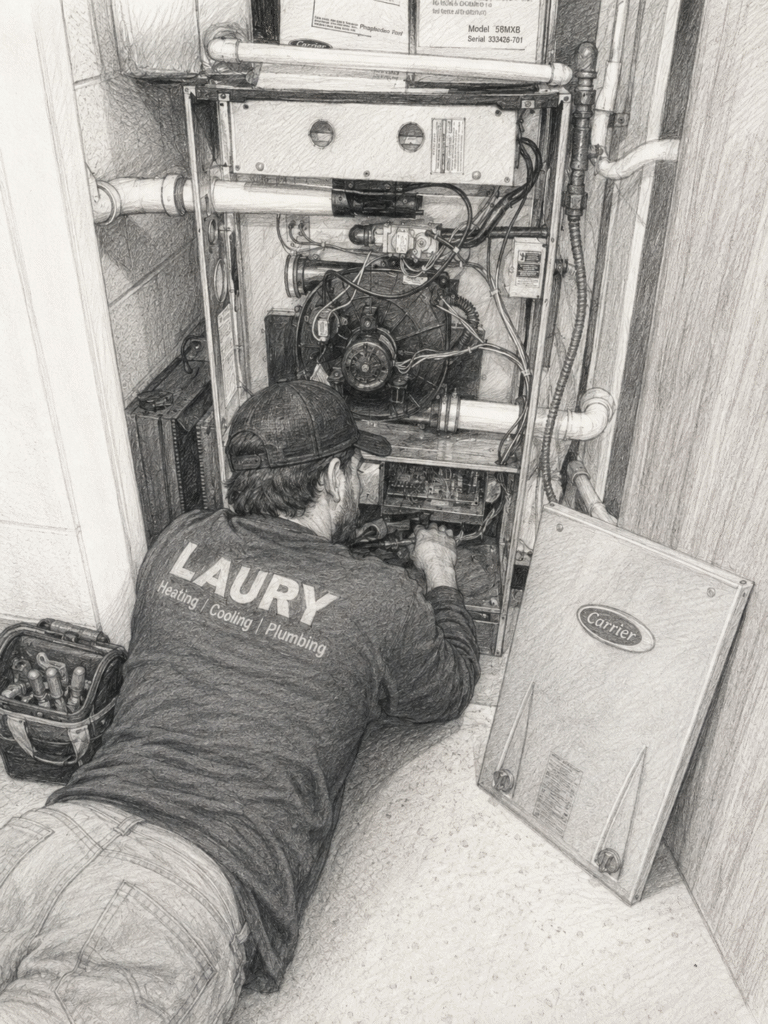
Why Is Cold Air Coming From My Furnace Vents?

Cold air may come from your furnace vents when the blower runs but the furnace is not producing heat. Common causes include an incorrect thermostat setting, restricted airflow, ignition failure, overheating, or a problem with the furnace’s controls.

Is the Thermostat Fan Set to “On”?

Check the thermostat first. It should be set to Heat, and the selected temperature should be higher than the current room temperature.

Next, check the fan setting. When the fan is set to On, the blower runs even when the furnace is between heating cycles. This can make the vents blow cool air.

Change the fan setting to Auto. The blower should then run only while the furnace is actively heating.

Is a Dirty Filter Causing the Furnace to Overheat?

A clogged filter restricts airflow through the furnace. Heat can then build up inside the equipment.

As a safety measure, the furnace may shut off the burners while allowing the blower to continue running. The result is cold air coming from the vents.

A dirty filter may also cause:

  • Weak airflow
  • Short heating cycles
  • Higher energy use
  • Uneven temperatures
  • Frequent furnace shutdowns

Replacing the filter may solve the problem. However, continued cold air could mean the furnace’s limit switch or another component needs repair.

Is the Furnace Failing to Ignite?

A gas or oil furnace cannot produce heat if the fuel does not ignite properly.

Possible causes include:

  • A failed electronic ignitor
  • A dirty or damaged flame sensor
  • A burner problem
  • A faulty gas valve
  • An extinguished pilot light on an older furnace
  • An empty oil or propane tank
  • A furnace control-board problem

A furnace may begin its startup sequence but shut the burners off after only a few seconds. The blower may then continue moving cold air through the home. These parts should be inspected by a trained heating technician.

High-efficiency furnaces can also stop heating when a condensate drain becomes blocked. The safety controls may prevent the burners from operating until the drainage problem is corrected. Leaking ductwork can create a different problem by losing heated air or pulling colder air into the system.

What Can I Check Before Calling for Furnace Repair?

Before calling for furnace repair, check the thermostat, fan setting, filter, vents, power, and fuel supply. These simple steps can rule out common causes of cold air. If the furnace still does not heat, schedule a professional inspection.

  1. Set the thermostat to Heat.
    Raise the temperature several degrees above the current room temperature.
  2. Set the fan to Auto.
    The On setting can circulate cool air between heating cycles.
  3. Wait a few minutes.
    On the first cool mornings in South Jersey, the furnace may need a few minutes to warm the ductwork.
  4. Check the furnace filter.
    Replace a visibly dirty filter with the correct size and type. Dust and seasonal pollen can quickly restrict airflow.
  5. Open the supply vents.
    Make sure furniture, rugs, and curtains are not blocking vents or return grilles.
  6. Check the furnace power.
    Confirm that the furnace switch is on and the circuit breaker has not tripped. Do not keep resetting a breaker that trips again.
  7. Check the fuel level.
    Many rural South Jersey homes use oil or propane. Make sure the tank is not empty.

If you smell gas, leave the home without using switches or appliance controls. Call 911 and your gas utility from a safe location. If a carbon monoxide alarm sounds, move everyone outside and call emergency services. Do not return until responders say the home is safe.

When Should I Call a Furnace Technician?

Call a furnace technician when cold air continues after you check the thermostat, filter, vents, power, and fuel supply.

The Furnace Starts but Quickly Shuts Off

This is often called short cycling. The furnace may start, stop, and restart several times without completing a normal heating cycle.

Possible causes include restricted airflow, overheating, a dirty flame sensor, a failing limit switch, or a thermostat problem. Short cycling places added wear on the system and should not be ignored.

The Blower Runs but the Furnace Never Produces Heat

The blower may continue running even when the burners fail to ignite. This can point to an ignitor, flame sensor, fuel-supply, control-board, or safety-switch problem.

A technician can test the furnace’s startup sequence and identify where the process is stopping.

Only Certain Rooms Receive Cold Air

Cold air in one part of the house may involve more than the furnace itself.

Loose, damaged, or poorly insulated ductwork can lose warm air before it reaches the room. Duct leaks may also pull colder air from an attic, basement, garage, or crawlspace.

Laury Heating Cooling & Plumbing provides heating repair in Vineland and across South Jersey. We diagnose furnaces that short cycle, fail to ignite, blow cold air, or heat the home unevenly.

What Happens During a Laury Furnace Repair Visit?

Laury Heating Cooling & Plumbing has served South Jersey homeowners since 1945. Our team includes NATE-certified technicians, and our company holds an A+ rating with the Better Business Bureau. We repair gas, electric, and oil furnaces, along with heat pumps, boilers, and other residential heating equipment.

You Will Know Who Is Coming

When your technician is on the way, we send you a tracking link. It includes the technician’s photograph, biography, and live GPS arrival information.

You can see who is coming and follow the trip to your home. For example, you may see that your technician has finished a repair in Hammonton and is heading to your home in Washington Township.

We Diagnose the Cause Before Recommending a Repair

The technician will ask what you have noticed and inspect the furnace. Depending on the symptoms, the evaluation may include:

  • Thermostat settings and operation
  • Filter condition and airflow
  • Blower performance
  • Burners and ignition components
  • Flame sensor operation
  • Limit and safety controls
  • Electrical connections
  • Venting and combustion
  • Condensate drainage
  • Furnace control codes
  • Accessible ductwork

Once the cause is found, we explain the problem and review the available options. Work begins only after you approve the repair.

Finally, we run the furnace again. We confirm that the system starts correctly, produces warm air, and completes a normal heating cycle.

For furnace repair in South Jersey, contact Laury Heating Cooling & Plumbing.

Frequently Asked Questions

A furnace blowing cold air may have an incorrect thermostat setting, a dirty filter, an ignition problem, restricted airflow, or a failed safety control. The blower can still run even when the furnace is not producing heat. Start by setting the thermostat to Heat and the fan to Auto. If the air stays cold, schedule a professional inspection.

It can be normal for a furnace to blow cool air when it first starts. The blower may begin moving air before the burners fully warm the system and ductwork. The air should become warm within a few minutes. If cold air continues through the heating cycle, the furnace may have an airflow, ignition, or mechanical problem.

Yes, a dirty furnace filter can cause cold air to come from the vents. A clogged filter restricts airflow and may cause the furnace to overheat. The safety controls can then shut off the burners while the blower keeps running. Replace a visibly dirty filter, but arrange service if the furnace continues blowing cold air.

When your furnace is blowing cold air, check that the thermostat is set to Heat and the fan is set to Auto. Make sure the filter is clean, the supply vents are open, and the furnace has power. Oil and propane systems should also have enough fuel. Do not open furnace panels or attempt repairs involving gas, wiring, or safety controls.

Call for furnace repair when the system keeps blowing cold air after you check the thermostat, filter, vents, power, and fuel supply. You should also call if the furnace starts and stops repeatedly, makes unusual sounds, needs frequent resets, or never ignites. Prompt service can help prevent added wear and a complete loss of heat.