Furnace Not Turning On? Common Causes and What to Do

A furnace that will not turn on can leave your home cold with little warning. The cause may be as simple as an incorrect thermostat setting, a dirty air filter or a switched-off power supply. It may also involve the furnace’s ignitor, flame sensor, blower motor, control board or safety system.

Before scheduling a repair, South Jersey homeowners can perform several safe checks. This guide explains what to look for, what different furnace symptoms may mean and when the problem should be handled by a qualified heating technician.

Do not continue troubleshooting if you smell gas, see smoke, notice melted wiring or hear your carbon monoxide alarm. Leave the home when necessary and contact the appropriate emergency service or utility provider. Carbon monoxide cannot be seen, smelled or tasted, and fuel-burning furnaces can produce it when something goes wrong.
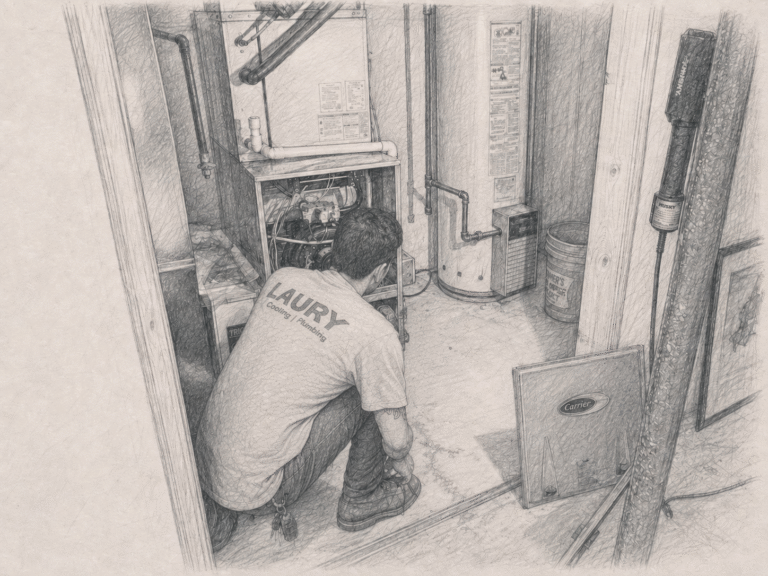
What to Check When Your Furnace Will Not Turn On

Start with the controls and other items you can inspect without opening the furnace or handling gas and electrical components.

1. Check the Thermostat

Make sure your thermostat is:

  • Set to “Heat”
  • Set several degrees above the current room temperature
  • Displaying normally
  • Using working batteries, if applicable
  • Programmed for the correct day and time

After adjusting the temperature, wait several minutes. Some heating systems have a built-in delay before beginning a new cycle.

If the thermostat screen is blank, replace the batteries if the model uses them. A blank display can also indicate a loss of power, a wiring problem or a tripped safety switch.

2. Check the Furnace Power

Most furnaces have a power switch mounted on or near the equipment. It often resembles a standard light switch and can be turned off accidentally.

Confirm that the furnace switch is in the “On” position. Then check the electrical panel for a breaker labeled Furnace, Heat or HVAC.

A tripped breaker may be reset once. Do not continue resetting it if it trips again. Repeated tripping may indicate a short circuit, overloaded motor, damaged wiring or another electrical problem that requires professional diagnosis.

3. Inspect the Air Filter

A severely clogged filter can restrict airflow and cause the furnace to overheat. When that happens, a safety control may shut the burners down to protect the equipment.

Remove the filter and check its condition. Replace it if it is heavily covered with dust or debris, making sure the airflow arrow points in the correct direction.

ENERGY STAR recommends regularly inspecting and changing furnace filters because a dirty filter can increase operating costs, restrict airflow and contribute to equipment problems.

Common Reasons a Furnace Will Not Start

If the thermostat, power supply and filter appear normal, the furnace may have an internal problem. These are some of the most common possibilities.

Ignition or Fuel-Supply Problems

Modern gas furnaces typically use an electronic ignitor rather than a continuously burning pilot light. If the ignitor is cracked, dirty or worn out, the furnace may attempt to start without lighting the burners.

Other possible ignition-related causes include:

  • A dirty or malfunctioning flame sensor
  • A closed gas valve
  • An interrupted natural-gas or propane supply
  • A faulty gas valve
  • A blocked burner
  • A pressure-switch problem
  • A venting or combustion-air restriction

You may hear the furnace begin its startup sequence but never feel warm air from the vents. Some systems will attempt ignition several times before entering a safety lockout.

Gas valves, burners and combustion components should be inspected by a qualified technician. Do not attempt to light, clean or repair them yourself.

Electrical or Control Problems

The thermostat sends a signal to the furnace’s control system when the home needs heat. A failure anywhere in that circuit can prevent the furnace from starting.

Possible electrical and control problems include:

  • Loose or damaged thermostat wiring
  • A failed transformer
  • A blown low-voltage fuse
  • A faulty control board
  • A malfunctioning relay
  • A defective door safety switch
  • A failed blower capacitor or motor

Electrical testing requires proper instruments and an understanding of the furnace’s operating sequence. These issues usually cannot be identified accurately through visual inspection alone.

Furnace Safety Lockout

A furnace may shut itself down after detecting repeated ignition failures, overheating, improper venting or another unsafe operating condition. This is known as a safety lockout.

Turning the furnace off and back on may temporarily reset some systems, but repeated resets are not a repair. A furnace that continues entering lockout needs to be diagnosed so the underlying problem can be corrected.

What Does Your Furnace Do When You Turn Up the Heat?

The way the furnace responds can provide clues about where the failure is occurring.

Furnace symptom Possible causes
Nothing happens at all Thermostat, power supply, breaker, door switch, wiring or control-board problem
Furnace clicks but does not start Ignitor, relay, control-board or gas-supply problem
Furnace starts but burners do not ignite Ignitor, flame sensor, gas valve, pressure switch or venting problem
Burners ignite and quickly shut off Dirty flame sensor, airflow restriction or safety-control problem
Furnace runs but no air comes from the vents Blower motor, capacitor, control board or electrical problem
Air comes from the vents but stays cold Ignition failure, thermostat setting, overheating or burner problem
Breaker trips when the furnace starts Motor, wiring, electrical short or overloaded circuit

These symptoms can narrow the possibilities, but they do not confirm a diagnosis. Several different failures can produce similar behavior.

Can You Reset a Furnace That Will Not Turn On?

You may reset the furnace once if the manufacturer’s instructions explain how to do so safely. For many systems, this involves turning the thermostat off, switching off furnace power, waiting several minutes and restoring power.

Do not repeatedly reset the furnace. Multiple failed startup attempts may indicate an ignition, electrical, venting or safety problem. Repeatedly restarting the equipment can also make an intermittent failure more difficult to diagnose.

Never reset the furnace when:

  • You smell gas
  • The breaker repeatedly trips
  • You see smoke or sparking
  • Wiring appears burned or melted
  • The furnace makes a loud boom during ignition
  • A carbon monoxide alarm is sounding

When Should You Call for Furnace Repair?

Schedule professional furnace repair when the basic thermostat, power and filter checks do not restore heat.

You should also call a heating technician when:

  • The furnace repeatedly attempts to start
  • The burners ignite and then shut down
  • The furnace breaker trips more than once
  • The blower will not start
  • The furnace displays a recurring error code
  • You hear buzzing, grinding, banging or delayed ignition
  • The furnace repeatedly enters safety lockout
  • There is evidence of overheating or damaged wiring
  • The system starts only after being reset
  • Your home remains cold even though the furnace appears to run

A technician can test the electrical supply, thermostat signal, ignition sequence, safety controls, airflow and combustion system to identify the actual failure.

Furnace Not Turning On During a South Jersey Winter?

A furnace failure can become urgent when a South Jersey cold snap brings freezing temperatures overnight. Whether you live near the farmland of Cumberland or Salem County, closer to the Delaware Bay, or in a community near the Pine Barrens, your home can become dangerously cold when the heat stops working.

While waiting for service, keep exterior doors and windows closed, reduce unnecessary heat loss and use only approved supplemental heaters according to the manufacturer’s instructions.

Never use a gas oven, stove, outdoor heater, grill or generator to heat your home. These appliances can create serious fire and carbon monoxide hazards when used indoors or improperly.

If the home becomes dangerously cold, move children, older adults, pets and anyone vulnerable to a safe, heated location. Vineland-area residents can also check the Vineland Code Blue website for local seasonal shelter information and updates.

Furnace Repair in South Jersey

Laury Heating Cooling & Plumbing diagnoses and repairs furnace problems throughout South Jersey. Our technicians work on many furnace brands and system types, including older heating systems and equipment with less-common configurations.

If your furnace will not start after the basic checks above, schedule professional heating repair in South Jersey. We can identify whether the problem involves the thermostat, ignition system, blower assembly, electrical components, safety controls or another part of the furnace.

Call 856-823-4144 or schedule furnace repair online.

Frequently Asked Questions

If the thermostat appears to be working but the furnace is not turning on, the problem may involve the furnace’s power supply, door switch, control board, ignitor, gas supply or safety controls. A technician may need to test whether the thermostat’s heating signal is reaching the furnace.

A furnace that clicks but does not start may have a failed ignitor, faulty relay, gas-supply problem or control-board issue. Repeated clicking without ignition should be professionally diagnosed rather than continually reset.

Yes, a severely dirty filter can restrict airflow and cause the furnace to overheat. A safety limit switch may then shut the burners down, although the furnace may still appear to make startup attempts.

A furnace may suddenly stop because of a tripped breaker, switched-off power supply, thermostat failure, clogged filter, ignition problem or activated safety control. Start with the thermostat, furnace switch, breaker and filter before arranging a repair.

A failed ignitor may cause the furnace to begin its startup sequence without lighting the burners. Because the same symptom can result from a gas valve, pressure switch, flame sensor or control problem, proper electrical testing is needed to confirm that the ignitor has failed.

A furnace that will not turn on does not automatically need replacement. The better choice depends on the cause of the failure, repair cost, equipment condition, efficiency, age and previous repair history. A professional diagnosis should come before making the repair-versus-replacement decision.