

A tankless water heater may be better if you want continuous hot water, better efficiency and more floor space. A conventional tank water heater may be better if you want a lower installation cost and a simpler replacement.
Neither type is right for every home. The best choice depends on your hot water use, budget, utilities and existing equipment.
This is annoying because homeowners usually want a simple winner. Life rarely provides one. We asked both water heaters for a straight answer. Things got heated.
Tankless vs. Tank Water Heaters at a Glance
- Tankless water heaters heat water as you use it.
- Tank water heaters heat and store a fixed supply.
- Tankless systems usually cost more to install.
- Tank systems are often easier to replace.
- Both types require maintenance.
- Proper sizing matters more than the name on the front.
Watch: What's The Difference Between Tankless & Tank Water Heaters?
In this video, Anthony, a local plumber with Laury Heating Cooling & Plumbing, explains how both systems work and why one type may fit your home better. We also cover hot water capacity, efficiency, installation and maintenance.
How Does a Tankless Water Heater Work?
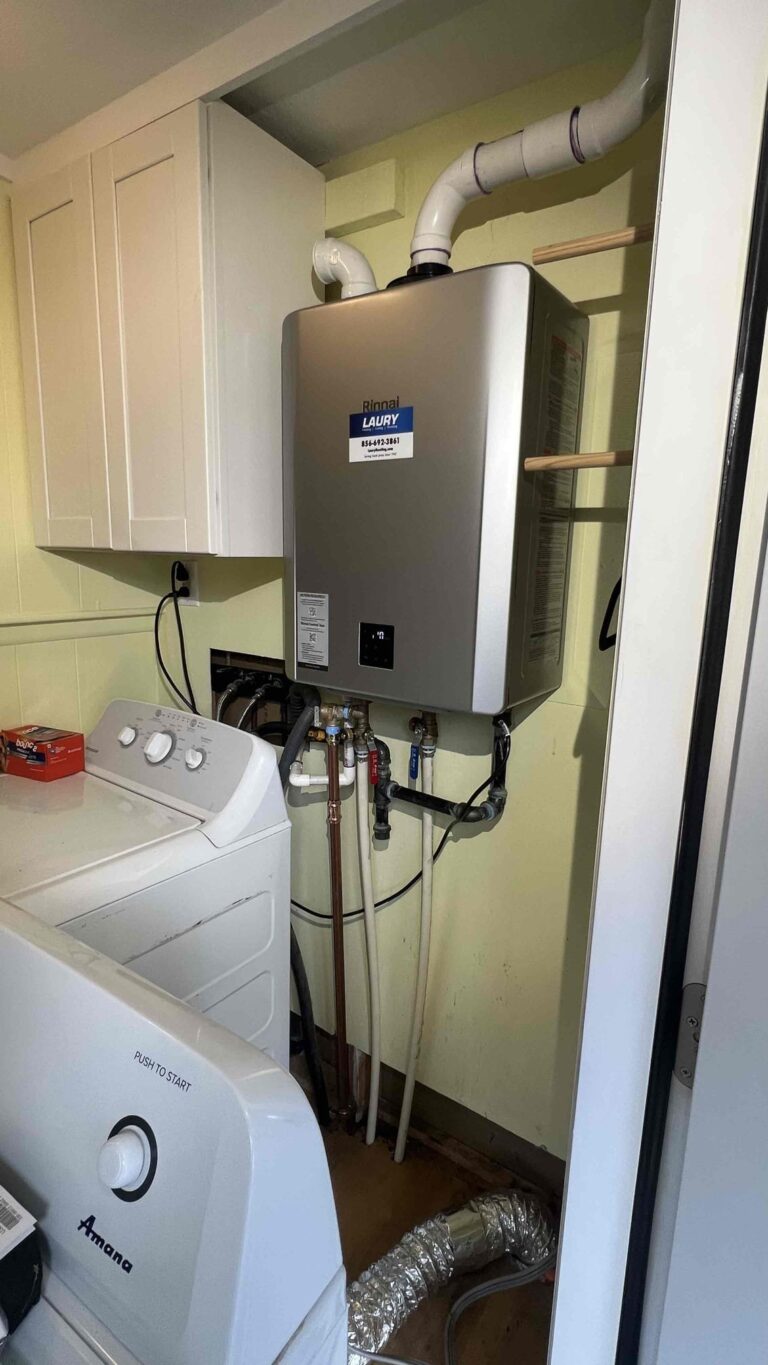
A tankless water heater begins heating water when you open a hot water fixture. Cold water passes through a heat exchanger. A gas burner or electric element heats the water before it reaches the fixture.
There is no storage tank. The system can keep producing hot water as long as demand remains within its capacity.
This is often called endless hot water. However, every unit has a maximum flow rate. Running several showers, sinks and appliances at once may exceed that limit. Physics remains stubbornly involved.
Proper sizing matters. Laury is a Rinnai ACE PRO, or Advanced Comfort Expert Professional. This is Rinnai’s highest-tier installer and service certification. It reflects advanced training in sizing, installing and servicing Rinnai tankless water heaters.
How Does a Conventional Tank Water Heater Work?
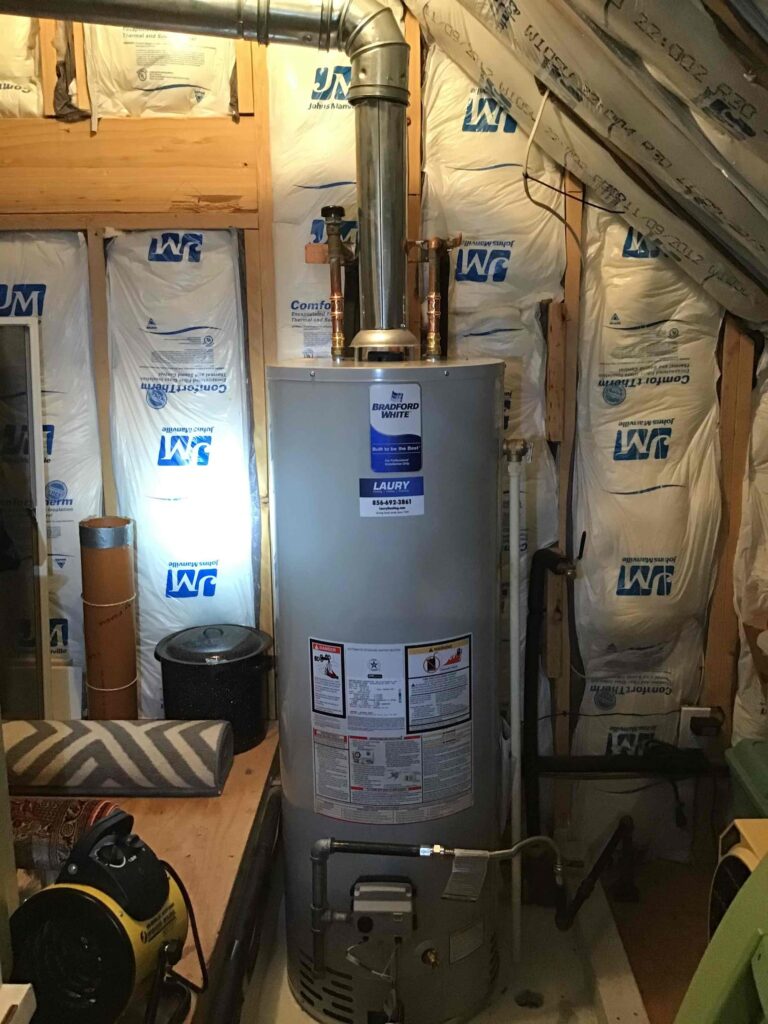
A conventional water heater heats and stores water in a tank. Most South Jersey homes have a 40 or 50 gallon model.
The tank maintains the water at a set temperature. When you open a fixture, hot water leaves the tank and cold water enters. The burner or electric elements then heat the new water.
A tank provides a ready supply for short periods of heavy use. However, the stored water can run out. Once that happens, you must wait for the heater to recover.
Tankless vs. Tank Water Heater Comparison
| Feature | Tankless Water Heater | Tank Water Heater |
|---|---|---|
| Basic design | Heats water when needed | Heats and stores water |
| Hot water supply | Continuous within its capacity | Limited by tank size and recovery |
| Common measurement | Gallons per minute (often 9.0 to 11.1 gallons per minute) | Tank capacity in gallons (often 40 to 50 gallons) |
| Energy use | Runs mainly during hot water use | Maintains stored water throughout the day |
| Installation | Compact and wall mounted | Larger and floor standing |
| Installation cost | Usually higher | Usually lower for a similar replacement |
| Venting | Often requires a condensing vent system | Depends on gas, electric and vent type |
| Electricity | Required for operation | Depends on the model |
| Maintenance | Descaling, flushing and filter cleaning | Tank flushing and anode inspection |
| Hard water | Scale can affect the heat exchanger | Sediment collects in the tank |
| Expected life | Often longer with proper maintenance | The tank eventually becomes vulnerable to corrosion |
| Best fit | Efficiency, longer hot water use and space savings | Lower cost and simpler replacement |
Which Type Provides More Hot Water?
A properly sized tankless water heater can keep producing hot water. However, it still has a flow limit. Open too many fixtures at once and the miracle ends. Apparently, even endless hot water has terms and conditions.
Cold South Jersey groundwater can also reduce winter output. The unit must work harder to heat each gallon.
A tank water heater provides a ready supply for short periods of heavy use. Once the tank is empty, you must wait for it to recover.
The right size depends on how many fixtures may run at once, not just how many people live in the home.
Which Water Heater Is More Efficient?
Tankless water heaters are generally more efficient than standard gas tank water heaters.
They only heat water when it is needed. They also avoid most standby heat loss. A tank water heater must periodically reheat its stored water, even when nobody is using it.
Better efficiency does not always mean the upgrade pays for itself quickly. The savings depend on:
- Household water use
- Local fuel costs
- Equipment efficiency
- Installation cost
- Maintenance
- Expected service life
A high efficiency system installed in the wrong home is still the wrong system. It is simply wrong more efficiently.
Which Type Costs Less to Install?
A conventional tank water heater usually costs less to install when it replaces a similar tank.
The existing gas line, water connections and venting may already be suitable. This can make the job more direct.
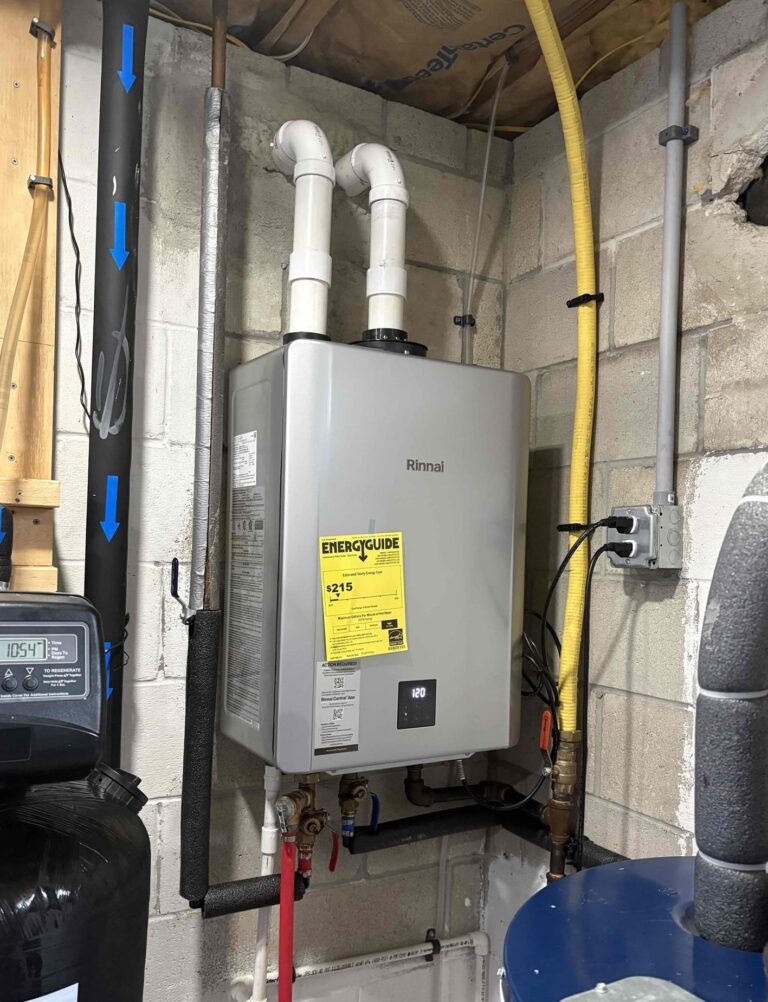
Changing from a tank to a tankless water heater may require:
- A larger gas line
- New vent piping
- A condensate drain
- An electrical outlet
- Plumbing changes
- A recirculation pump or related equipment
These changes can increase the initial cost. They may also provide better efficiency, more usable space and longer periods of hot water.
A professional should inspect the complete installation before giving you a comparison. The equipment price is only part of the project.
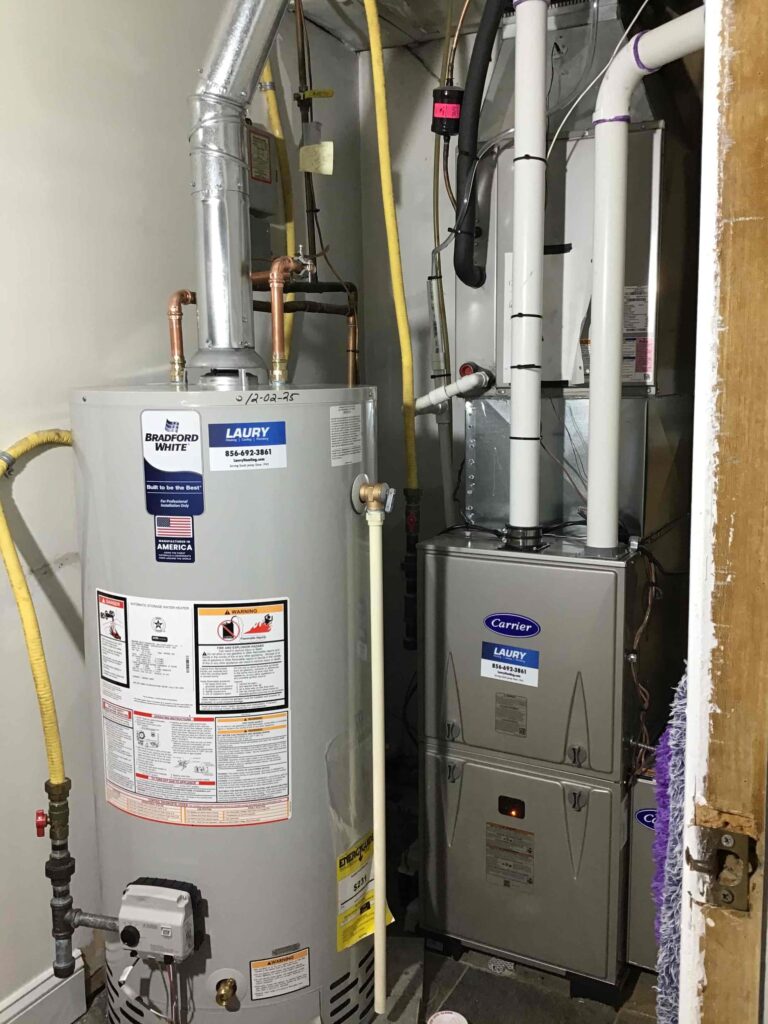
When Should You Choose a Tankless Water Heater?
A tankless water heater may make sense if:
- Your household frequently runs out of hot water.
- You want better energy efficiency.
- You need more floor space.
- You expect to remain in the home for several years.
- Your gas service and venting can support the system.
- You are willing to complete regular maintenance.
Learn more about tankless water heaters services in South Jersey.
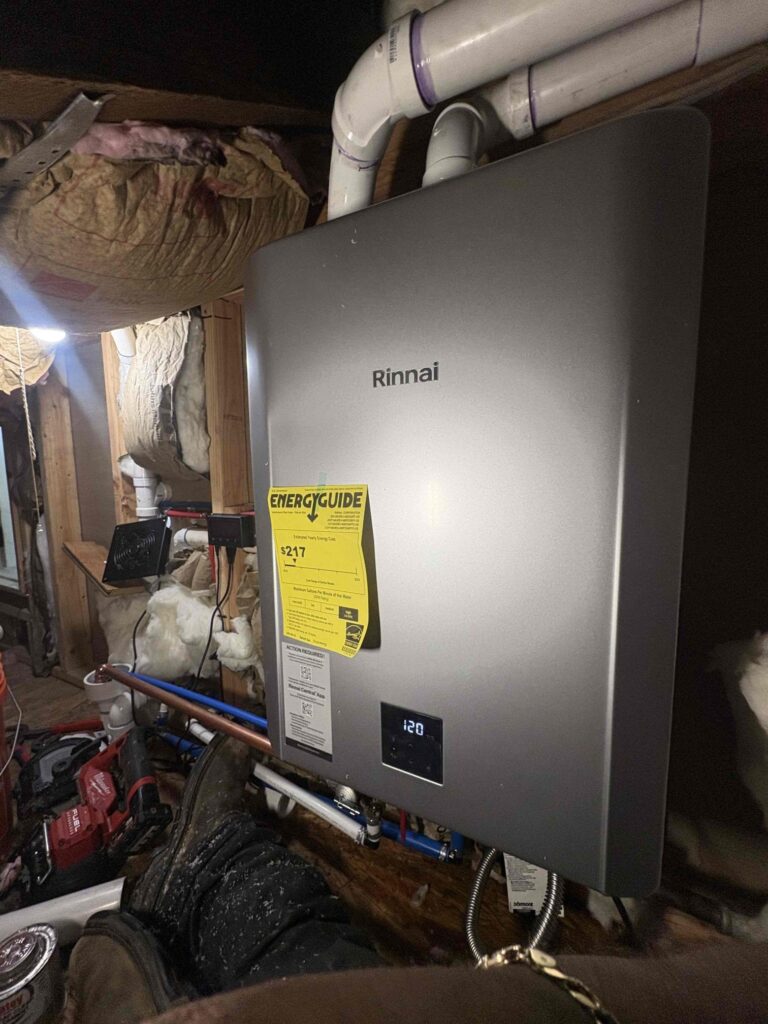
When Should You Choose a Tank Water Heater?
A conventional tank water heater may make sense if:
- You want a lower initial cost.
- Your current tank meets your household’s needs.
- You want a simpler replacement.
- Your home cannot easily support tankless requirements.
- You prefer familiar equipment with straightforward operation.
- You need stored water for brief periods of high demand.
A tank water heater is not automatically outdated. It remains a practical choice for many homes. New technology is useful when it solves an actual problem. Otherwise, it is just a more expensive object in the basement.
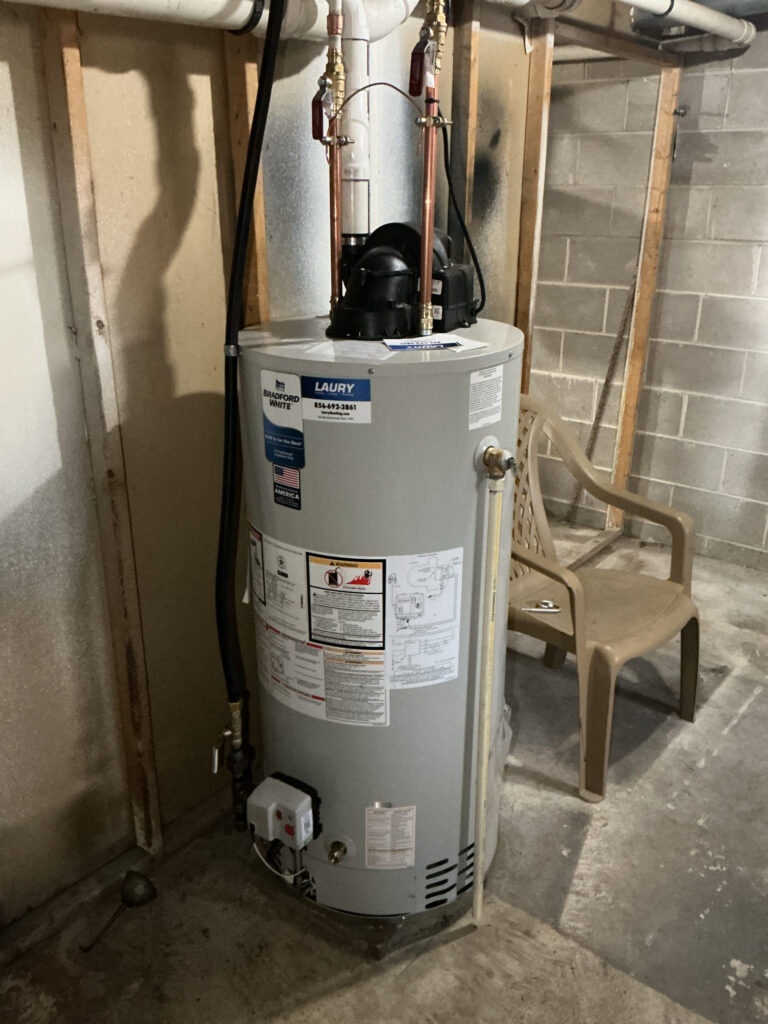
Which Water Heater Is Better?
Choose tankless when continuous hot water, efficiency and space savings are your main priorities.
Choose a conventional tank when installation cost, simplicity and easy replacement matter most.
Neither answer is morally superior. The water does not care. Your home, budget and daily routine do.
Laury Heating Cooling & Plumbing has served South Jersey since 1945. Our licensed plumbers install and service both tank and tankless water heaters.
FAQs
A tankless water heater does not always provide instant hot water. It begins heating when you open a fixture. The hot water must still travel through the pipes. A distant bathroom will usually wait longer.
A recirculation system can shorten the wait. The plumbing layout and equipment will determine how well it works. Tankless means heated on demand. It does not mean the water has learned to teleport.
What happens during a power outage depends on the water heater. Tankless units require electricity for ignition, controls, sensors and fans. Electric tanks, heat pump models, power-vent gas tanks and power-direct-vent gas tanks also stop heating.
Many standard atmospheric gas tank heaters can operate without outside electricity. A tank may also have some stored hot water available until it is used or cools. Check the requirements for your exact model.
Tankless water heaters usually require more regular maintenance. This is especially true in homes with hard water. They need periodic descaling, filter cleaning and inspections of the venting and condensate system. Scale can damage the heat exchanger and reduce performance.
Tank water heaters need flushing to remove sediment. Their anode rods, burners, controls and venting also need inspection. The tank will eventually become vulnerable to corrosion. Neither type is maintenance-free. That phrase normally means nobody has received the repair bill yet.
Yes, you can replace a tank water heater with tankless. It is not always a direct swap. A plumber must calculate your peak hot-water demand and the required temperature rise. The gas meter, gas line, electrical supply, venting, drainage, water quality and installation location must also be checked.
Some homes need only minor changes. Others need a larger gas line, new venting, an electrical outlet or a condensate drain. These upgrades can increase the installation cost. The heater may be small enough to hang on the wall.