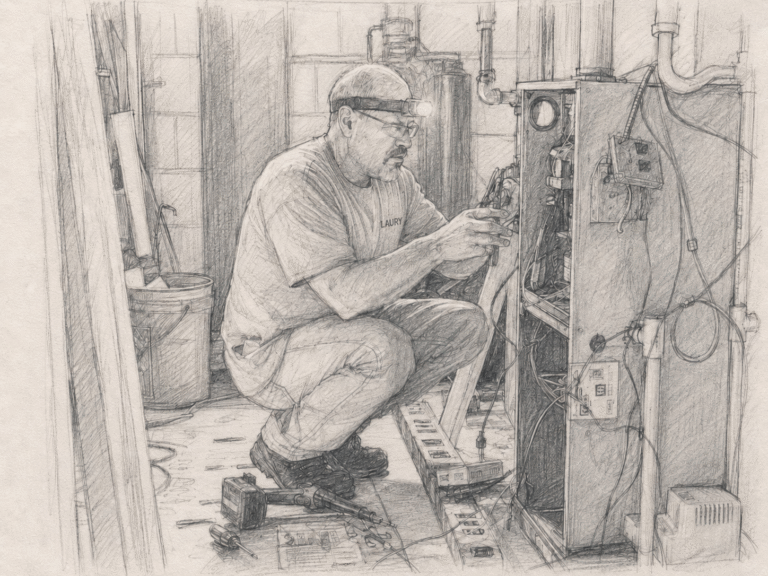
Common Heating Problems & What to Do

When your furnace or heating system stops working properly, the cause is not always obvious. A thermostat setting, dirty air filter or tripped breaker may be easy to correct, while ignition, blower motor, electrical or boiler problems usually require professional diagnosis.

This guide introduces common heating problems experienced by South Jersey homeowners. Select the issue that most closely matches what your system is doing to learn about possible causes, safe steps you can take and when to schedule heating repair.

Safety note: Turn the system off and contact Laury Heating Cooling & Plumbing if you smell gas, see smoke, notice sparking, hear unusual combustion noises or suspect a carbon monoxide problem.

Furnace Startup and Ignition Problems

A furnace that will not start may have a problem with its thermostat, electrical supply, safety switch, ignition system or another internal component.

Furnace Not Turning On

If nothing happens when your thermostat calls for heat, begin with a few basic checks. Confirm that the thermostat is set correctly, the furnace switch is on and the circuit breaker has not tripped.

Learn more about the possible reasons your furnace is not turning on.

Furnace Not Igniting

A furnace may receive power and attempt to start without successfully producing heat. This can happen because of a dirty flame sensor, failed ignitor, gas-supply issue or another ignition-system problem.

Furnace Keeps Tripping the Circuit Breaker

A breaker that trips repeatedly should not simply be reset over and over. The furnace could have an overloaded blower motor, damaged wiring, a short circuit or another electrical fault.

Furnace Airflow and Temperature Problems

Your furnace may run but still fail to heat the house properly. Airflow restrictions, thermostat problems, ductwork issues and equipment failures can all reduce heating performance.

Furnace Blowing Cold Air

Cold air from the vents does not always mean that the furnace has completely failed. The cause could be an incorrect thermostat setting, dirty filter, overheating furnace or ignition problem.

Furnace Blower Not Working

The blower distributes heated air through your ductwork. When it stops working or produces weak airflow, the problem may involve the filter, fan motor, capacitor, control board or duct system.

Heat Is Running, but the House Is Still Cold

A heating system can run for long periods without bringing the house to the desired temperature. Possible causes include heat loss, restricted airflow, duct leakage, thermostat problems or equipment that is not operating at full capacity.

Uneven Heating and Cold Rooms

Rooms that remain colder than the rest of the house may indicate closed vents, blocked returns, ductwork problems, insufficient insulation or an improperly balanced heating system.

Furnace Cycling and Shutoff Problems

A properly operating furnace should start, complete a heating cycle and shut off after the thermostat reaches the selected temperature. Frequent cycling or continuous operation can indicate a developing problem.

Furnace Keeps Turning On and Off

Short cycling occurs when a furnace repeatedly starts and stops before completing a normal heating cycle. A dirty filter, overheating system, thermostat issue or improperly sized furnace could be responsible.

Furnace Will Not Turn Off

A furnace that continues running may have an incorrect thermostat setting, wiring problem, stuck relay or malfunctioning control component.

Furnace Noises and Odors

Heating systems make some normal sounds as they start, operate and cool down. New, loud or persistent noises and odors should not be ignored.

Furnace Making Banging, Buzzing or Rattling Noises

Different sounds can point to different problems. Rattling may involve a loose panel, buzzing can indicate an electrical issue, and banging may be related to ductwork or delayed ignition.

Burning Smell From the Furnace

A mild dusty smell can be normal when the furnace first runs for the season. Persistent burning, electrical or plastic odors may signal overheating, damaged wiring or another unsafe condition.

Boiler Problems

Boilers operate differently from forced-air furnaces, but unusual noises, uneven heating and performance problems can still indicate the need for service.

Boiler Making Banging, Knocking or Kettling Noises

Boiler noises may be caused by trapped air, mineral buildup, circulation problems, water-pressure issues or components expanding as they heat.

What Can You Safely Check Yourself?

Before scheduling service, homeowners can usually perform a few basic checks:

  • Confirm that the thermostat is set to Heat and above the current room temperature.
  • Replace a visibly dirty furnace filter.
  • Check whether the furnace power switch is on.
  • Look for a tripped circuit breaker.
  • Make sure supply vents and return-air grilles are open and unobstructed.
  • Check whether the thermostat needs new batteries.
  • Confirm that the equipment access panel is fully closed.

Do not open sealed equipment compartments, handle gas components or repeatedly reset a breaker. Stop troubleshooting if you smell gas, see smoke or believe the system may be unsafe.

When to Call a Heating Professional

Professional heating service is recommended when:

  • The furnace will not start after basic checks.
  • The system repeatedly starts and stops.
  • The breaker continues to trip.
  • The furnace produces cold air.
  • Airflow is weak or absent.
  • The home remains cold while the system runs.
  • You hear loud banging, buzzing or grinding.
  • You notice persistent burning or electrical odors.
  • The boiler makes repeated knocking or kettling noises.
  • A carbon monoxide detector activates.

These symptoms can involve electrical components, gas combustion, motors, controls, ductwork or other parts that require proper testing.

Heating Repair in South Jersey

Laury Heating Cooling & Plumbing helps homeowners diagnose and repair furnace, boiler and other home heating problems in Vineland and throughout South Jersey. Our technicians work with many types of heating equipment, including older systems and less-common system configurations.

When basic troubleshooting does not solve the problem, schedule professional heating repair in South Jersey before a minor issue becomes a more disruptive or expensive failure.

Frequently Asked Questions

A furnace commonly stops working because of a thermostat setting, dirty air filter, tripped breaker, switched-off furnace or ignition problem. When those basic checks do not restore heat, the furnace may have a safety-control or internal component failure that requires professional diagnosis.

You should not keep resetting your furnace repeatedly. One reset may be appropriate when completed according to the manufacturer’s instructions, but repeated resets can hide an electrical, ignition or safety problem that needs repair.

A burning smell from the furnace can be normal when it is a light, dusty odor during the first heating cycle of the season. A strong or persistent smell, especially one resembling burning plastic, electricity or smoke, is not normal and should be investigated.

A furnace may run without properly heating the house because of restricted airflow, leaking ductwork, excessive heat loss, thermostat trouble, burner problems or insufficient heating capacity. A technician can test the system to determine why it is operating without producing enough usable heat.

Whether you should repair or replace your furnace depends on its age, condition, efficiency, repair history and the cost of the current problem. A professional evaluation can help compare the cost of repairing the existing furnace with the long-term value of installing a replacement.